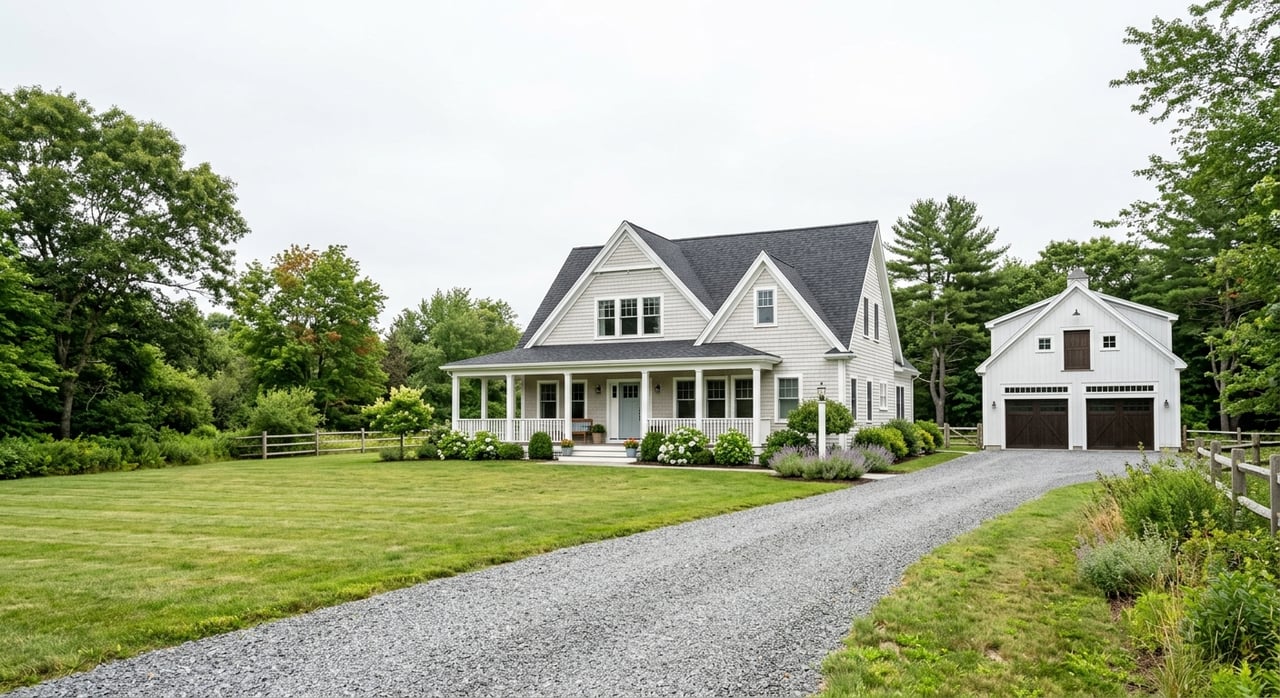
Selling A Home On Acreage In Estell Manor
July 16, 2026
July 16, 2026
If you are selling a home on acreage in Estell Manor, you are not just selling bedrooms, baths, and square footage. You are also selling access, land use, utility systems, and the real-world usability of the parcel. That can feel like a lot to sort through, but the good news is that the right prep can make your property easier to understand and easier to price. Let’s dive in.
Estell Manor is not a typical subdivision market. According to the New Jersey Pinelands Commission fact book, 95% of the population, 96% of the housing units, and 72% of the city’s area are within the Pinelands.
That matters because buyers often look beyond the house itself. They want to know how the land functions, what improvements exist, and whether the parcel supports their plans. In Estell Manor, those answers can affect both interest level and value.
A standard home sale usually focuses on condition, layout, updates, and recent comparable sales. In Estell Manor, a property on acreage should be marketed as a land-and-home sale.
That means details like street frontage, outbuildings, septic and well status, and possible land constraints should be part of the listing story from the start. The more clearly you present those facts, the more confident buyers tend to feel.
Estell Manor requires every principal building to be on a lot with frontage on an improved public street. The city also requires irregular lots to preserve at least 50% of the minimum frontage requirement.
For you as a seller, this makes access more than a side note. Driveway layout, how the home sits on the parcel, and how visible or straightforward the approach feels can all shape buyer perception.
Not all acreage is equally usable. Local rules tied to wetlands, flood-hazard areas, and Pinelands protections can limit where development or clearing may occur.
The city code states that no development in a wetland or within 300 feet of a wetland may proceed without required conditional-use approval. It also says clearing and soil disturbance should be limited to what is necessary, with existing vegetation preserved where practical.
This is why buyers often ask a very specific question: How much of the land can actually be used? A 10-acre parcel with major constraints may not appeal the same way as a smaller parcel with more functional open area.
Detached garages, sheds, barns, and similar structures can add value and utility, but only when they are properly understood and documented. Estell Manor’s general regulations limit accessory structures in residential areas to one story and a maximum height of 16 feet, and they may not be placed in a required front yard.
Before you list, it helps to measure these structures, confirm their use, and gather any records you have. Good photos and clear descriptions can prevent confusion later.
Some buyers are drawn to acreage because they want room for chickens, goats, horses, or a hobby-farm setup. Estell Manor’s animal ordinance says farm animals and fowl may not be raised on tracts under 2 acres, with broader allowances on larger lots and more flexibility on 10-acre parcels and above if properly maintained.
If your parcel size supports those uses, that can be an important part of your marketing. If it does not, it is still better to be clear up front so buyers know what to expect.
Acreage sales usually move more smoothly when the seller prepares answers before buyers ask the questions. In Estell Manor, a strong pre-listing packet can save time and reduce surprises during inspections and attorney review.
Here are the most useful items to assemble:
You do not need to solve every technical issue yourself. But having documents ready makes the property easier to evaluate and often strengthens buyer confidence.
In rural Atlantic County, septic is a major part of transaction readiness. New Jersey Department of Environmental Protection homeowner guidance says prospective buyers should secure a septic inspection to help confirm whether the system is functioning properly and whether it is suitable for future needs such as additions or other construction.
Atlantic County’s Environmental Health Unit also issues permits and inspects new subsurface sewage disposal systems, including alternative-design systems that may be required in certain Pinelands areas. If your home is on septic, records and system history are worth organizing early.
If your property is served by a potable private well, New Jersey’s Private Well Testing Act applies. NJDEP says untreated groundwater must be tested for up to 43 parameters, and both parties must review the results before title closes.
NJDEP also says the average cost of this testing is about $1,200 to $1,500. That makes well testing both a timing issue and a budget item, so planning ahead can help you avoid delays near closing.
Atlantic County’s guidance adds more context. Local testing commonly covers bacteria, nitrates, lead, mercury, volatile organic compounds, synthetic organic compounds, radium, metals, and PFAS.
One of the biggest pricing mistakes in rural markets is assuming more acres automatically means a higher price. Public Atlantic County sales records for Estell Manor show a wide range of outcomes.
Examples of improved acreage home sales include 104 Cape May Ave at 5 acres for $461,500 on June 14, 2024; 111 Cumberland Ave at 10 acres for $575,000 on July 26, 2024; 162 Fourth Ave at 12.91 acres for $411,000 on November 15, 2024; 133 Tenth Ave at 5 acres for $533,000 on March 28, 2025; 143 Eighth Ave at 7.81 acres for $350,000 on May 28, 2025; and 135 Walkers Forge Rd at 11.70 acres for $369,000 on July 25, 2025.
That spread shows an important truth. Land value is not linear. Condition, utility type, outbuildings, access, and usable area can matter as much as total acreage.
County records also show much lower-priced acreage transactions, including 139 Third Ave at 6.85 acres for $6,500 in 2024, 170 Ninth Ave at 5 acres for $41,000 in 2024, and 104 Cumberland Ave at 10 acres for $165,000 in 2025.
Those sales should usually be treated differently from improved single-family home sales. If you compare your lived-in home with utility systems and structures to a land-only or atypical sale, you can end up with a distorted pricing picture.
For an Estell Manor acreage property, the best comparable sales usually share several traits:
This is where local market judgment matters. A good pricing strategy looks at the whole package, not just the acre count.
Serious buyers for acreage properties tend to be practical. They want to understand what they are buying before they invest time and money in inspections.
Expect questions like these:
If you can answer these questions early, your listing becomes more compelling and easier to trust.
Acreage homes often attract buyers who are comparing lifestyle, land use, and long-term flexibility. They are not just buying a house. They are buying a setup.
That is why preparation matters so much in Estell Manor. When your pricing reflects the right comparable sales and your listing answers the land questions up front, you can reduce uncertainty and put your property in a stronger position.
Selling a home on acreage in Estell Manor calls for more than a standard listing template. You need a clear story about the house, the parcel, the utility systems, and the documents that support it.
Liz brings practical Atlantic County market knowledge and hands-on seller support to that process, from pricing and positioning to buyer communication and transaction management. If you are thinking about selling, connect with Elizabeth Hildebrand to discuss your property and build a smart plan for the market.
Stay up to date on the latest real estate trends.
Get assistance in determining current property value, crafting a competitive offer, writing and negotiating a contract, and much more. Let me guide you through your home-buying journey.

ELIZABETH HILDEBRAND
703 WHITE HORSE PIKE ABSECON NJ 08201